- Smart Stride
- Posts
- Why does nobody look at the shoes?
Why does nobody look at the shoes?
Two stories about the healthcare blind spot I keep seeing

Tim Roozendaal
January 18, 2026
This is my grandma.
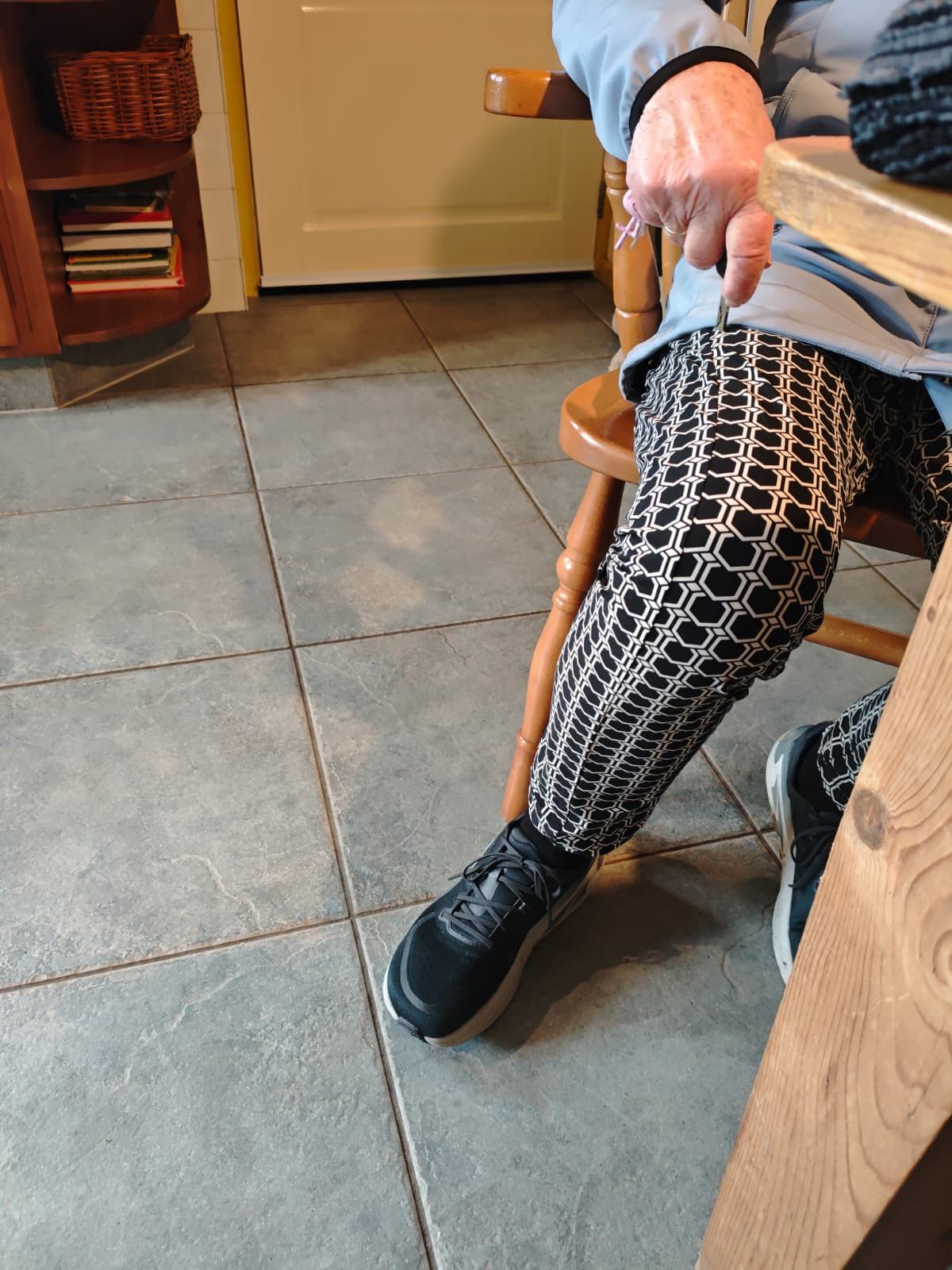
She's rocking her 4th pair of Altra Paradigm 7s right now. Getting a lot of compliments from her elderly neighbors.
But how does an 83-year-old end up in some niche, wide toebox shoes? Because I recommended them to her.
Here's how that happened:
A year ago, my grandma came by just to vent. Her feet were a mess. Blood blisters, small wounds that wouldn't heal, constant discomfort. She'd done everything right—visited the GP, got prescribed some cream, got referred to a pedicure specialist.
The pedicure took care of her feet and recommended 'wandelwol'—basically wool with lanolin that's supposed to help with pressure points and keep toes healthy. After two visits and not much progress, she accepted it. "It's just part of aging," she told herself.
When she mentioned all this to me, I asked about her shoes.
"No, it's not the shoes!" she said immediately. "I just bought these great shoes for €200."
High price tag = good shoes, right?
I asked her to take the insole out and stand on it.
The size was too small.
Her big toe leaned over the edge.
Two of her smaller toes didn't even touch the insole.
She was shocked when I explained what we were looking at. But she was also frustrated—why hadn't the GP noticed? Why hadn't the pedicure specialist suggested different shoes?
I asked her to come visit me at the store. We ordered a pair of Paradigm 6s. She was skeptical at first—she wasn't used to wearing sneakers or sports shoes—but she trusted me enough to try.
The Paradigm was perfect for her. Wide toebox that worked with her foot shape. A bit more cushion for comfort. Guiderails for some stability.
Then the magic started happening.
Within four weeks, her feet healed up. No more creams. No more pedicures. No more wandelwol. She started walking pain-free again.
And within a few more weeks, she actually needed to go up half a size because her feet started to relax and spread out naturally.
This isn’t unusual for me.
This week, I had another conversation. A cyclist dealing with persistent calf tightness. His physio gave him the usual suspects—calf stretches (bent and straight leg), calf raises (seated and standing), all the standard exercises.
It was getting better, but barely. When I asked if anything had changed recently, he mentioned he'd just switched to new cycling shoes.
Those rigid cycling shoes? Depending on where the cleats are mounted, they can completely change the load on your calves.
The physio didn’t even try to figure out what was causing the calf tightness and just described some exercises.
I keep seeing this pattern: healthcare professionals treating symptoms without looking at footwear.
And I get it—footwear isn't part of standard medical training. GPs, physios, pedicure specialists—they're incredibly skilled at what they do, but shoes just aren't on their radar.
So here's what I'd suggest if you're dealing with foot pain, shin splints, calf issues, or anything that just won't go away:
Ask yourself: what changed?
Did you switch shoes? Increase your volume? Change your training surface? Start cycling more?
Then get multiple opinions.
I've had customers come in with podiatrist recommendations for specific shoes. Sometimes we agree. Sometimes we find something completely different that works way better for them.
Don't accept "it's just aging" or "keep doing the exercises" without digging deeper.
My grandma's feet weren't failing because she was 83. They were failing because her shoes didn't fit.
The cyclist's calves weren't weak. His shoes were putting them in a compromised position for hours at a time.
The root cause matters. And sometimes, it's as simple as what you're putting on your feet.
If you're struggling with something that won't go away—whether it's foot pain, shin splints, calf tightness, whatever—and you can't seem to find a fix, there's a good chance your shoes are part of the equation.
I can help you figure out what's actually going on. Reply to this email and let's talk.
Thank you for reading,
Tim 👟